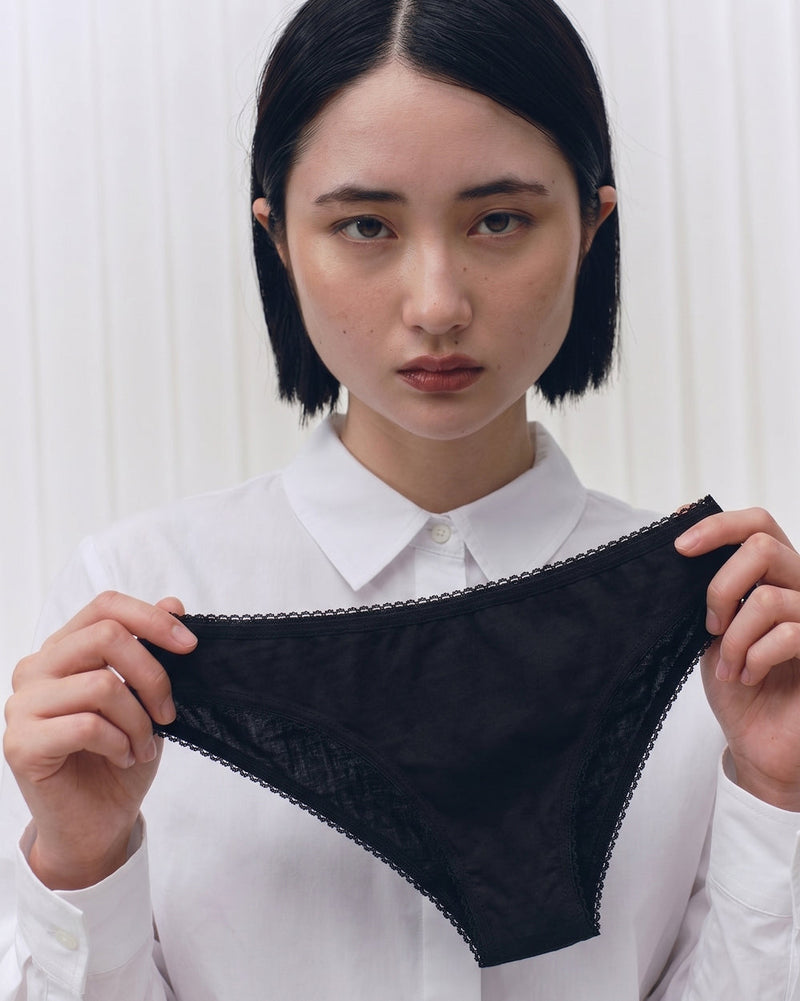
Bamboo underwear is sold as soft, cool and eco-friendly. Cotton underwear, as the classic choice. And modal shows up more and more at brands like Tommy John and Calvin Klein. But what the label says isn't always what it seems. Here's how each fabric is made, how it feels and which one suits you.
The Key Difference: How the Fiber Is Made
Cotton is a natural fiber: it grows on the plant, and it's picked, cleaned and spun as it is. Bamboo and modal are something else: they're regenerated cellulose fibers. Wood or cane is dissolved with chemicals into a pulp, which is then forced through tiny holes to create new threads. That's why they're called semi-synthetic: the source is natural, but the fiber is manufactured.

Bamboo underwear
Almost all "bamboo" underwear is actually bamboo viscose, or rayon. To make it, the cellulose is dissolved with caustic soda and carbon disulfide. Exposure to carbon disulfide has been linked to neurological and cardiovascular disease in viscose factory workers, and production has moved mainly to South and East Asia.
In the US, this has legal consequences. The FTC, the agency that regulates advertising, requires these fabrics to be labeled as rayon or viscose made from bamboo, not as "bamboo". In 2022, Kohl's and Walmart agreed to pay $5.5 million in civil penalties ($2.5 million and $3 million) for marketing rayon products as "bamboo" and making misleading environmental claims. According to the FTC, the rayon manufacturing process uses toxic chemicals and results in the emission of hazardous pollutants.
Pros: very soft, silky drape, cool to the touch and good moisture absorption. Cons: the process is chemical, the "bamboo" in the marketing is no longer bamboo by the time it reaches the garment, and it's usually blended with elastane. An OEKO-TEX certification limits residues in the finished garment, but it doesn't change how it was made.

Modal underwear
Modal is a refined version of viscose, made mostly from beech wood. After spinning, it's stretched to better align the molecules, which makes it stronger and finer. Unless it's made with certified sourcing and a high-standard process, it's only a little more sustainable than standard viscose, and it's still a chemical process.
It varies by manufacturer. Lenzing's TENCEL Modal uses beech from certified forests (PEFC or FSC) in Austria and neighboring countries, and recovers a high share of the process ingredients. If a brand uses modal, look for that name.
Pros: extremely soft and silky, absorbent, and its finer, stronger fiber holds up better than standard viscose. Cons: a chemical process, wood sourcing varies widely between manufacturers, and it's almost always blended with elastane or cotton.
Cotton underwear
Cotton isn't dissolved or regenerated: the fiber you wear is the one that grew on the plant. It's breathable, absorbs sweat and handles hot washes without trouble. Its weak point is that conventional short-staple cotton can feel rougher, pill and lose its shape over time.
That's where the difference between cottons comes in. Pima cotton, an extra-long staple fiber, makes a fabric that's much softer and stronger than regular cotton, and softness is exactly what draws people to bamboo and modal. Organic cotton is grown without synthetic pesticides or fertilizers.
Pros: a natural fiber, breathable, durable through washing and free of a chemical dissolving process. Cons: regular cotton is less soft and doesn't last as long. 100% cotton stretches less than elastane blends, so the fit feels different.
Comparison
| Bamboo (viscose) | Modal | Regular cotton | Organic Pima cotton | |
|---|---|---|---|---|
| Fiber type | Regenerated cellulose | Regenerated cellulose | Natural | Natural |
| Process | Chemical (caustic soda and carbon disulfide) | Chemical, somewhat cleaner | Mechanical | Mechanical, no synthetic pesticides |
| Softness | Very high | Very high | Medium | High |
| Breathability | Good | Good | Good | Good |
| Durability | Medium | Good | Medium | High (extra-long staple) |
| US label | Must say "rayon" or "viscose made from bamboo" | Modal | Cotton | Cotton |
So, Which Is Better?
It depends on your priorities:
- If you want maximum softness and don't mind the process: modal, ideally TENCEL Modal.
- If bamboo appeals to you because it sounds eco-friendly: keep in mind that what you're wearing is viscose, and that the FTC itself has fined major retailers for selling it as something natural.
- If you want a natural fiber, with no chemical dissolving process, that washes well: cotton. And if you want softness without giving that up, organic Pima cotton.
Where Egos In Check Fits In
At Egos In Check we chose organic Pima cotton precisely to get the best of both worlds: the softness people look for in bamboo or modal, in a natural fiber. Our underwear is made in organic Pima cotton, gusset included, sewn in Peru, and every batch goes through a quality audit before leaving the workshop. We make thongs and bikinis in Onyx Black and Undyed, a soft beige that is simply the natural color of cotton, with no dye at all.
Want the full picture? Read Is Your Underwear Non-Toxic? We Checked 10 Popular Brands and Pima vs Egyptian vs Supima vs Regular Cotton.
Frequently Asked Questions
Is bamboo underwear better than cotton?
It's softer and silkier than regular cotton, but it's almost always viscose made with a chemical process. Cotton is a natural fiber, and pima cotton is known for its softness.
Is bamboo underwear really made of bamboo?
The source plant is, but the fiber isn't: it's dissolved and regenerated as viscose. That's why in the US it must be labeled as "rayon" or "viscose made from bamboo".
Is modal better than cotton?
It's softer and silkier, but it's a fiber made with a chemical process. Cotton is natural and holds up better to hot washes.
What fabric is best for sensitive skin?
Many people with sensitive skin prefer undyed natural fibers. If you react to a fabric, see a dermatologist to identify the cause.
Sources
All sources accessed October 29, 2026.
- FTC Uses Penalty Offense Authority to Seek Largest-Ever Civil Penalty for Bogus Bamboo Marketing from Kohl's and Walmart (Federal Trade Commission, April 8, 2022)
- Kohl's, Walmart to pay $5.5 million for falsely claiming rayon products were bamboo (FOX 29)
- The Ongoing History of Harm Caused and Hidden by the Viscose Rayon and Cellophane Industry (American Journal of Public Health, 2018)
- What Is Modal? Material Guide, Ethics and Sustainability (Good On You)
- Viscose vs. Modal vs. Lyocell (Undershirts.co.uk)